
Movies are changing in so many ways, one of the most overt
being the way they are presented to us. The old days gave us movies straight –
just a stand-alone hour and a half to two hour flick, no adornments, no extra
stuff attached, just the straight film as it was. Now, though, that’s
different. Now, it almost seems like the traditional forms of movies just aren’t
enough to please moviegoers anymore. Movies are going interactive.
 |
| DISCLAIMER: Most people who watch movies are not this attractive. Picture from movietwatch.blogspot.com. |
That sounds like a rather extreme conclusion – obviously plenty
of movies today are still very traditionally done, and people enjoy them fine.
However, a large portion of the big movies in theaters now don’t seem content
with just being movies. They have to try to be something else – like, say, a
comic book. The most blatant example of what I’m talking about is Marvel’s
Avengers series.
For the whole two of you that aren’t up to date, they’re
basically reconstructing the entire way we see movie franchises, sequels and
tie-ins. They’ve taken their four big box-office draw superheroes – Thor,
Captain America, Hulk and Iron Man – and crammed them into one big movie in The Avengers. They’re also making
individual films for each one, and sequels for all of them, in between each Avengers movie. The effect is a constant
whirlpool of hype and – somewhat cynically so, perhaps – box office dough.
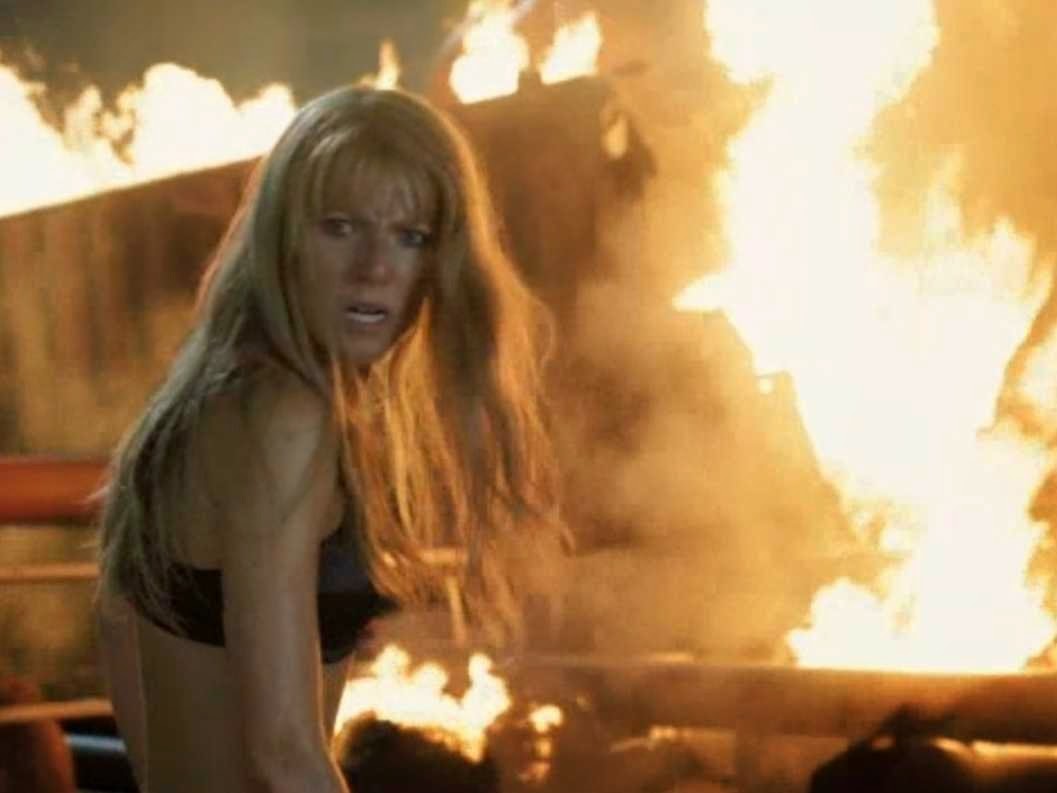 |
| Hot chick in her underwear destroying everything? That's two cliches in one. Picture from businessinsider.com. |
By doing this, Marvel has changed the way we watch movies.
We have to keep watching each one as they come out if we want to keep up with
the storyline that will eventually be shown in Avengers 2 in 2015 or so. The little clips and easter eggs they
sprinkle in after the end credits in each individual hero’s film only makes it
more necessary to see each one if one wants to get the whole story.
The style of marketing has made the series of films play out
more like a series of comic books. We get multiple films that act as “comic
book issues” for each character, then a big multi-spanning tie-in adventure
with all of them in one. Which is appropriate, seeing as all of these
tights-and-spandex crusaders originally spawned from the ink-pen page anyway.
Things are coming full circle with the way these Marvel movies are playing out.
Back to the roots – which is a trend all its own.
This was a natural outcome. Naturally films are changing in
style and approach. As the world has grown more interactive, movies have
changed in approach – this all reflects the 24/7, interconnected mentality
going on. Everything has to be at full-speed all the time. There’s no room for
downtime anymore in the news and the hype-train has to keep going at full
speed, no stops until Bedlam, miles to go before sleep. Hype has to keep going.
As cynical as it sounds, that IS a big part of why movies are so
inter-connected and span so many various titles now. Money!
You can see more examples of movies trying to be other
things in how we do young adult movies now. Three huge Y.A. franchises – Harry Potter,
Twilight and the upcoming Hunger Games: Mockingjay – split up their final films
into two movies, so as to make more money---cough, cough, I mean, preserve the integrity of the stories.
You know. By making sure you see all the
details the author of the book intended. That's why they had to stretch out The Hobbit into three movies, you know; because otherwise it just wouldn't have integrity. It wasn't about making money at all.
 |
| Picture from thewrap.com. |
Personally I like movies better when they’re movies. The way these franchises are
making out, it’s like they think they’re making books with visual accompaniment. The Hunger Games and Harry Potter
films are structured like books rather than movies. They have chapters and
cliffhangers, and people want to keep watching because they’re unsatisfied
until they can see the rightful end of the story. That’s not how movies used to
work (not all the time, at least, like now) – it’s interesting that they’ve changed to become this way.
 |
| "But...I wanted to see the rest!" Picture from vampirediaries.alloyentertainment.com. |
It’s also interesting that so many book-to-movie transitions
have gone so well these days. Between comic book adaptations like Watchmen to the aforementioned Hunger Games as well as more
contemporary novels like The Girl With
the Dragon Tattoo, filmmakers are trying harder to keep true to the source
material when they adapt into movie forms. For die hard fans, that’s a great
thing – if you really, really wanted to see a visual representation of Lisbeth
Salander slicing up some pervert with no changes from how she did it in the
original book, the movie will work perfectly for you – either version, Swedish
or American.
 |
| Picture from stevenspielberg.wordpress.com. |
Call me a heretic, but I always enjoy seeing
a creative, visionary director make changes to a story for the silver screen. I
find it interesting to see different interpretations of a story. Of course,
many of them are crap, but you do get gems such as Stanley Kubrick’s The Shining
here and there – that’s worth it.
 |
| Jack's happy. Why can't you be? Picture from blogs.indiewire.com. |
Most scriptwriters or directors won’t go that route – with the
increased Twitter and Facebook communication between creative artists and fans,
it’s easier to know what fans want. Thus, there’s no excuse for dissonance
between an artistic personality and his or her fanbase anymore – there should
be no confusion. Though, I admit I could be partaking in some wishful thinking here.
Overall, the way movies are done now – in a more interactive
format for the fans – isn’t good or bad, it’s just different. We will always
have traditional, movies-for-movie-fans films, but now we have something else.
Now we have movies that interact with the audience and sprawl into larger
creations, becoming more than just a self-contained film. The Avengers movies
are parts of a whole, and they act like issues of a comic book series. The
Harry Potter/Hunger Games movies are visual reflections of their respective
books – they have multiple chapters.
Movies aren’t just a fourth wall between the makers and the
audience anymore – we’re not just consumers anymore. We play a more active role
now. We commit ourselves to these sequels and we’re suckered into seeing all of
them, even when we don’t like some of the ones that have come out. Movies are
becoming a larger thing now – as they evolve, movies are experimenting with the
format of filmmaking and release, and becoming something more epic and immersive
in scope, if not necessarily in storytelling.
I hope the storytelling can
reach the same quality as the effort put into arranging these films over
multiple years, franchises and directors. That would be great. Right now
though, things are in the hands of the people making the money. That can’t be
denied. Personally I just hope this kind of experimentation with how movies are
released doesn’t just degenerate into pure commercialism, as there are plenty
of good films still coming out under what I’ve talked about here.
Case in point: Captain America: The Winter Soldier is an
amazing movie that everyone should go see. Get on it now! What the hell are you waiting for, the fucking second coming of Christ to tell you to go see it?! Isn't my word good enough anymore?
 |
| Picture from fansided.com. |


